
Vahid Arya
11/16/2025
0
35
A bulk operation refers to the process of inserting, updating, or deleting a large number of records in a database in a single, optimized command or batch, rather than executing individual statements for each row.
This is critically important for performance in data-intensive applications(e.g. as ETL processes, migrations, or real-time analytics) because it reduces network latency, minimizes transaction log overhead, and can improve throughput by 10x to 100x compared to row-by-row operations.
So now that we understand the importance of the topic, let's take a look at ef's support for bulk operations and see if functions like AddRange() and RemoveRange() are considered bulk operations or not.

Vahid Arya
11/8/2025
0
26
words developers often throw around casually, but that have specific meanings or connotations.
In developer culture, words like boilerplate, spaghetti code, yak shaving, bike-shedding, and technical debt are shortcuts — they carry a whole concept and mood in one phrase.
Here’s a curated list of common developer terms, metaphors, and slang (with plain explanations and tone).
Vahid Arya
10/26/2025
0
36
Record type or record is a very interesting feature introduced in C# 9.0 , everything is considered immutable, and similarly, in C#, record types help us to work with immutable types.
Vahid Arya
10/26/2025
0
51
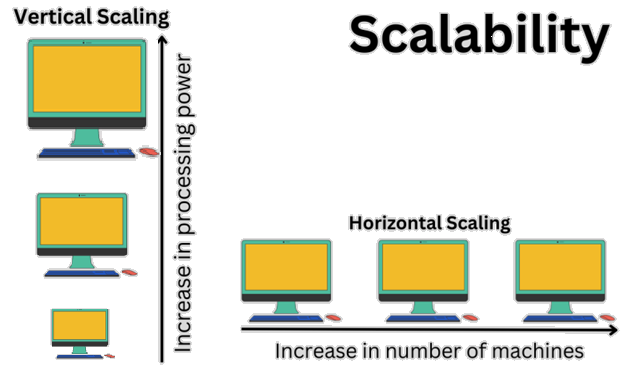
In this article , we provide a practical, step-by-step guide to making software systems scalable , from a single-server setup to a fully distributed architecture.
It begins with the fundamentals of I/O performance, explaining how hardware limitations such as disk speed and network latency affect system throughput. Then it explores progressive scaling strategies, including vertical and horizontal scaling, caching, asynchronous processing, and load balancing.
Finally, it addresses the deeper challenges of distributed systems . data consistency, CAP theorem, replication, sharding, and event-driven communication .
offering clear, real-world approaches for designing resilient, high-performance application

Vahid Arya
10/10/2025
0
46
EPPlus is a powerful and easy-to-use .NET library for reading, creating, and modifying Excel .xlsx files (Office Open XML format).
It provides an API similar to working with Excel itself — with support for formulas, charts, tables, styles, data validation, pivot tables, and more — all without needing Excel installed.
It’s ideal for:
- Generating Excel reports dynamically
- Importing or exporting data from databases
- Creating dashboards or analytics reports
- Building REST APIs that return Excel files

Vahid Arya
10/10/2025
0
54
CAP is a .NET library that helps implement the Outbox Pattern and distributed event publishing reliably.
It supports multiple databases (SQL Server, MySQL, PostgreSQL, etc.) and message brokers (RabbitMQ, Kafka, Azure Service Bus).
It automatically stores events in an outbox table within your database transaction and publishes them asynchronously.
It handles retries, failure scenarios, and event deduplication.
CAP is a great fit if you want out-of-the-box support for transactional outbox + message broker integration.
It abstracts away a lot of complexity.
Widely used in .NET microservice and event-driven architectures.
- Transactional consistency: Your business data and events are saved atomically.
- Reliable event publishing: Events are published asynchronously with retries.
- Supports multiple brokers and databases.
- Minimal setup: Integrates easily with EF Core and other ORMs.
- Automatic cleanup and monitoring.
- Helps you avoid reinventing the wheel.

Vahid Arya
10/6/2025
0
45
A Progressive Web App (PWA) is a web application that uses modern browser APIs to provide an experience similar to a native mobile app.
characteristics:
- Progressive – Works on any browser.
- Responsive – Fits desktop, mobile, or tablet.
- Offline-ready – Can work on low-quality networks or without connection.
- App-like – Feels like a native app (navigation, interactions).
- Fresh – Always up-to-date with service workers.
- Safe – Served via HTTPS.
- Installable – Users can add to their home screen.
- Discoverable – Search engines can find them (via manifest).
- Re-engageable – Can send push notifications.
- Linkable – Shared via simple URLs (no store required).

Vahid Arya
10/1/2025
0
75
Looking for an open-source way to implement 𝗦𝗦𝗢 in ASP.NET Core? This guide shows how to build a central authentication system using 𝗢𝗽𝗲𝗻𝗜𝗱𝗱𝗶𝗰𝘁, a free alternative to Duende Identity.
It includes:
• A working AuthServer and MVC client
• Login and consent pages
• Proper handling of first-time login flows

Vahid Arya
9/24/2025
0
46
K6 is both an HTTP load and functional test tool, written in Go and using the goja embedded JavaScript interpreter for test scripting purposes
Ever wondered how your API performs under heavy load?
I just wrote a practical guide on API load testing with k6 – from setup to thresholds and real-world scenarios.

Vahid Arya
9/16/2025
0
50
Securing APIs is a critical part of modern application development. Instead of reinventing authentication and authorization, we can rely on industry standards such as OAuth 2.0 and OpenID Connect.
𝗜𝗱𝗲𝗻𝘁𝗶𝘁𝘆 𝗦𝗲𝗿𝘃𝗲𝗿 is a system that manages user login, authentication, and secure access to applications. It helps apps know who the user is and what they are allowed to do, without each app handling logins separately.
𝗗𝘂𝗲𝗻𝗱𝗲 𝗜𝗱𝗲𝗻𝘁𝗶𝘁𝘆𝗦𝗲𝗿𝘃𝗲𝗿 is a highly extensible and standards-compliant framework for .NET Core that helps you issue tokens, handle authentication, and enforce authorization for your APIs and applications.
In this article , we used the 𝗰𝗹𝗶𝗲𝗻𝘁 𝗰𝗿𝗲𝗱𝗲𝗻𝘁𝗶𝗮𝗹𝘀 flow, which works well for 𝗺𝗮𝗰𝗵𝗶𝗻𝗲-𝘁𝗼-𝗺𝗮𝗰𝗵𝗶𝗻𝗲 communication. But in real applications with human users, we need an interactive login experience.
𝗜𝗻 𝘁𝗵𝗲 𝗻𝗲𝘅𝘁 𝗴𝘂𝗶𝗱𝗲, we will discover how to build a 𝗹𝗼𝗴𝗶𝗻 𝗨𝗜 and 𝗶𝗻𝘁𝗲𝗴𝗿𝗮𝘁𝗲 redirection to 𝗜𝗱𝗲𝗻𝘁𝗶𝘁𝘆𝗦𝗲𝗿𝘃𝗲𝗿 for scenarios such as .NET Core 𝗠𝗩𝗖 applications, 𝗦𝗶𝗻𝗴𝗹𝗲 𝗣𝗮𝗴𝗲 𝗔𝗽𝗽𝗹𝗶𝗰𝗮𝘁𝗶𝗼𝗻𝘀 (SPAs) like Angular or React, and even native 𝗺𝗼𝗯𝗶𝗹𝗲 or 𝗱𝗲𝘀𝗸𝘁𝗼𝗽 apps.
Tags
rabitmq
kafka
ef
cache
redis
dotnet
Programming
hybridcache
معماری
DDD
CQRS
Microservice
system_design
csharp
pattern_matching
Memcached
Sql Server
Yarp
Reverse_Proxy
dotnet_cli
OpenIddict
identity_server
SSO
duende_ids
k6
load_test
PWA
minimal_api
CAP
outbox_pattern
EPPlus
system_scalabling
vertical_scaling
horizontal_scaling
sharding
partitioning
software-engineering
Optimistic
Pessimistic
Concurrency
